What Humic Acid Actually Does to Your Soil
Fertilizer only works if the soil can deliver it. How humic acid affects soil structure, water holding, CEC, and soil biology.
Education
Most growers think carefully about what they feed their crops. Fewer think as carefully about whether their soil is actually capable of delivering it. A lot of yield is lost every season in the gap between what gets applied and what the crop actually uses.
Humic acid works in that gap. It is not a fertilizer. It is a group of organic compounds that improve how the soil delivers nutrients: its structure, its water-holding capacity, its biological activity, and its ability to hold and release nutrients to plant roots. Understanding what it does, and why, is useful whether you are evaluating a new input or simply trying to get more out of what you are already applying.
Fertilizing and enriching are not the same thing
Fertilization supplies the nutrients a crop needs to grow: nitrogen, phosphorus, potassium, and micronutrients. Done correctly, it works fast and the response is measurable. But fertilization assumes the soil is already a functional delivery system: that roots can access what has been applied, that water is moving correctly through the profile, that microbial communities are active enough to convert mineral forms into plant-available ones.
Soil enrichment is a different practice. It improves the soil itself: its organic matter content, biological activity, and physical structure. These changes take longer to manifest and they compound over seasons rather than showing up immediately.
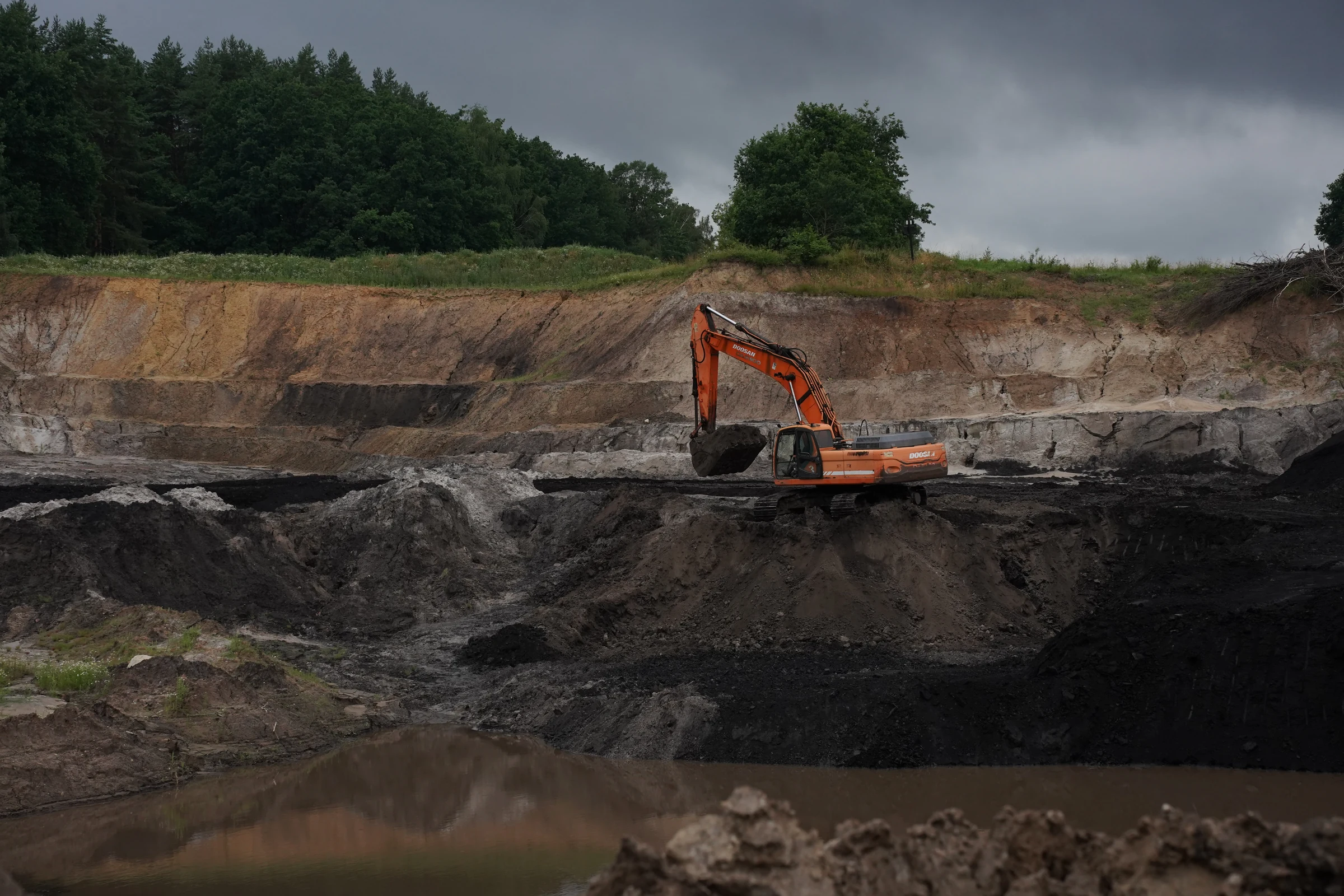
Productive agronomy needs both. The problem in most intensive commercial operations is that enrichment has not kept pace with fertilization. Organic matter has been mined down, microbial populations have declined, and soils that were once well-structured have become compacted or depleted. Fertilizer efficiency drops as a result. The products have not changed, but the soil can no longer use them as well as it once did.
If the soil cannot deliver what you apply, applying more is not the answer.
What humic acid is and where it comes from
Humic acids are complex organic molecules that form the core of soil humus, the dark, biologically active fraction of organic matter that builds slowly under natural conditions. They are produced through the long-term microbial decomposition of plant and animal material. In an undisturbed, well-managed soil, this process builds humus over years and decades. In most farmed soils, it has been significantly disrupted.
Commercial humic acid is extracted from leonardite, a soft, oxidized form of lignite with some of the highest natural concentrations of humic substances. It is, in practical terms, ancient concentrated humus. Applying it adds humic substances that would otherwise take years to build up in the soil.
Humic substances include humic acids, fulvic acids, and humin. Each has a different molecular weight, solubility, and behavior in the soil profile. Fulvic acids are smaller and more mobile, moving through the profile quickly and interacting directly with roots. Humic acids are larger, bind more strongly to soil particles, and drive the structural and CEC improvements. Both are present in quality commercial formulations, and both matter.
The four main mechanisms in the root zone
Humic compounds affect soil function through several interconnected mechanisms. The mechanisms reinforce each other, but it helps to look at them one at a time.
Chelation. Humic molecules bind metal cations such as iron, zinc, manganese, and copper through a process called chelation. This keeps those ions soluble and plant-accessible rather than locked in insoluble compounds in the soil matrix. In high-pH or heavily limed soils especially, micronutrient lock-up is a significant yield-limiting factor. Chelation is the mechanism that addresses it.
Water retention. Humic acid improves the soil's capacity to hold water, particularly in sandy or compacted soils where moisture drains before roots can access it. Part of the effect is direct, because humic molecules attract water. Part is structural: higher organic matter improves soil aggregation and pore structure. In drought-stress years, this effect alone can be the difference between a crop that holds yield and one that doesn't.
Cation exchange capacity (CEC). CEC is the soil's ability to hold positively charged nutrient ions (calcium, magnesium, potassium, ammonium) and release them to plant roots. It is one of the most important measures of soil fertility because it determines how much of what you apply actually stays available rather than leaching away. Organic matter is the primary driver of CEC in most agricultural soils. Increasing organic matter content directly increases CEC.
Microbial stimulation. Humic compounds serve as a carbon source and stimulant for beneficial soil bacteria and fungi. Higher microbial activity drives faster organic matter turnover, improves aggregate stability, and accelerates the conversion of mineral nutrients into plant-available forms. It also supports mycorrhizal networks that extend the effective rooting volume of a crop. In soils with depleted biological activity, this effect can be among the most significant humic acid provides.
What soil types and crops respond most
Most soils with depleted organic matter respond to humic acid, but how much depends on the starting point.
Soils with the greatest response potential are those that have the most to recover: sandy soils with inherently low organic matter, compacted soils with disrupted structure, and ground that has been through years of intensive chemical-only fertility programs without organic matter replacement. These soils typically show the strongest yield response because the baseline delivery capacity is lowest.
More moderate but still consistent responses are seen in medium-textured, reasonably managed soils. The benefit here tends to show up most clearly in years with weather stress (a dry spell, an early drought, or a very wet spring), when soil water management becomes the limiting factor and structural improvements to the soil profile matter more than inputs.
Trials have covered a wide range of crops: small grains including wheat, rye, and barley; row crops including corn, soy, and canola; brassicas; vegetables; and perennial fruit production. Root development effects tend to be most pronounced in root crops and intensive vegetable systems. Fertilizer efficiency effects tend to matter most in commodity row crops where input costs are a significant driver of margin.
What the research shows
The body of published research on humic acid in agriculture spans several decades and covers a wide range of crops, soil types, and geographies. Results vary with application rate, the starting condition of the soil, product quality, and weather, but they tend to point the same way.
Published trials report more root mass, better water retention in degraded soils, and higher soil microbial biomass, and some report that less synthetic fertilizer was needed to reach the same yield. The size of the effect changes from soil to soil and season to season, so treat any single number with caution.
The most useful pattern shows up over time. Soils treated with humic acid for several seasons tend to perform better each year, because the soil itself is being rebuilt and every other input works better in it.
Practical notes on application
Humic acid products vary a lot in concentration, source material, and formulation, and those differences show up in the field. Liquid formulations integrate naturally into fertigation systems or can be applied in-furrow at planting. Granular formulations are suited to soil incorporation at tillage or broadcast ahead of planting, where they work into the root zone before the season begins.
Timing matters. Pre-plant or early-season application gives humic compounds the most time to interact with the soil and influence root development from emergence. Foliar applications during the season can deliver fulvic acid fractions that support plant metabolism directly, but the soil structural benefits require soil contact.
Rate matters as well. Humic acid response follows a dose-response curve and more is not always better. Follow the label rate for your crop, and adjust for your soil type and organic matter level. More product is not the goal.
Soil as a long-term asset
Agricultural inputs are evaluated season by season. That is how farm businesses work and it is a rational way to make decisions. But soil organic matter does not operate on that timeline. It builds slowly, degrades slowly, and its effects on yield and input efficiency compound over years, not weeks.
Soils with strong organic matter and biological activity are more efficient with fertilizer, more resilient under weather stress, and more forgiving of management variation. The floor in a bad year is higher. That resilience pays off in the years when weather or markets work against you.
Humic acid does not replace a complete fertility program. It helps keep the soil able to use that program well, including in difficult seasons.